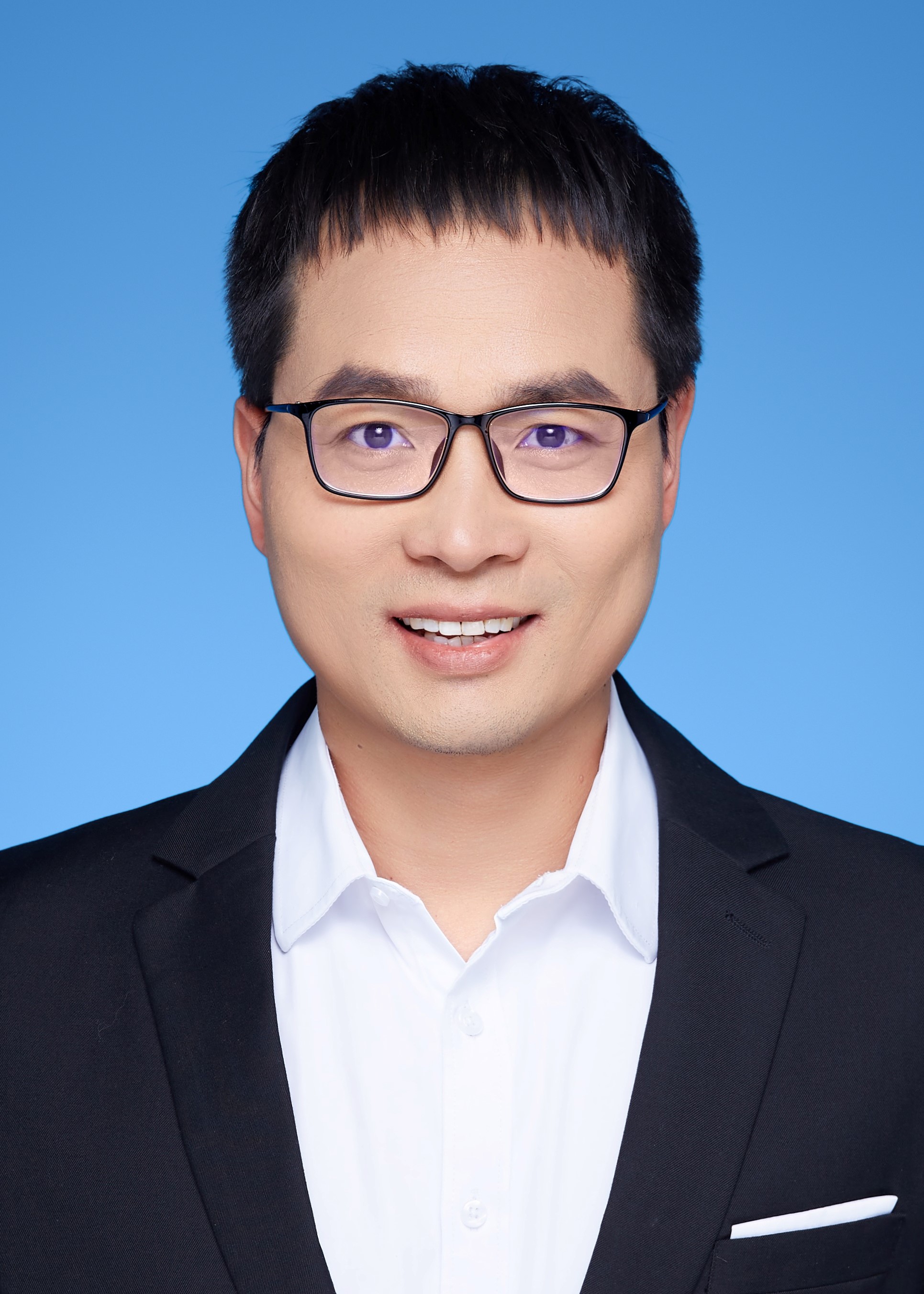
李自民
- 职务:黄土科学全国重点实验室副主任
- 职称:研究员
- 学历:博士研究生
- 邮箱:lizimin@ieecas.cn
 简介
简介李自民,博士,研究员,现任黄土科学全国重点实验室副主任,入选中国科学院人才计划(2024)、陕西省高层次人才(2023)和比利时国家FNRS学者(2019)。2019年毕业于比利时法语鲁汶大学获博士学位,以第一/通讯作者在Earth-Science Reviews、Nature Climate Change、Science Bulletin、Geochimica et Cosmochimica Acta、Communications Earth & Environment、Global Biogeochemical Cycle、Geoderma等国内外期刊上发表论文30余篇,并在PNAS等主流期刊合作发表学术论文60余篇,H指数为29,总被引3000余次。撰写Elsevier出版《环境土壤百科全书》(第二版)“硅循环”章节。获国家优秀留学生奖(全球评选500人,2018)和加拿大土壤学协会优秀学术奖(Benno Warkentin Prize,全球评选3人,2020)等奖励。
先后主持比利时国家自然科学基金、法国Tournesol国际合作交流、中国科学院人才项目、先导B专项子课题、全重实验室重点培育、陕西省等科研项目;担任国际土壤学SCI著名期刊Geoderma等编辑和编委,全国青年地学论坛理事,2021年欧洲地球科学联合会(EGU)大会专题、全国青年地学论坛(第九、十、十一届)专题召集人,德国和捷克国家自然科学基金评审人及Nature Geoscience、PNAS、GCB、Ecology Letter等多个国际著名期刊审稿人。
工作经历
2025.12 - 今 中国科学院地球环境研究所 研究员
2024.01 - 今 黄土科学全国重点实验室 副主任
2023.10 - 今 比利时法语鲁汶大学 客座研究员
2023.10 - 2025.11 中国科学院地球环境研究所 副研究员
2019.05 - 2023.09 比利时法语鲁汶大学 FNRS学者
2013.01 - 2013.03 澳大利亚南十字大学,地球科学学院 访问学者
 研究方向
研究方向主要从事硅-碳-水循环与全球变化研究,为黄土科学全国重点实验室方向三学术带头人,极端气候变化下硅-碳-水循环路径取得创新认识,聚焦于“植硅体/生物硅生物地球化学过程”;利用土壤过程模拟、动力学和元素示踪等地球化学方法,结合室内和野外土壤-植物系统控制实验,研究生物硅源对生态系统生物地球化学循环和全球变化的响应过程。
 获奖及荣誉
获奖及荣誉 代表论著
代表论著1. Li Z, Wang Y, Yong Hu, Peng Shi, Yue K, Song Z. 2025. Extreme climate-driven quartz dissolution alters global river-ocean silicon and carbon cycles. Science Bulletin, 1-2. https://doi.org/10.1016/j.scib.2025.12.006.
2. Wang Y, Li Z*. 2025. Hidden deep soil moisture droughts. Nature Climate Change, 5, 1273–1274.
3. Li Z, Wang Y, Yue K, Yang Y, Song Z. 2025. Why are readily soluble phytoliths more resilient? Earth-Science Reviews, 264, 105105.
4. Li Z, Wang Y, Song Z. 2025. Developing new varieties of deep-rooted crops: silicon and agroecosystem services. npj Sustainable Agriculture, 3(1), 2.
5. Yuan J, Wu Q, Li Z*, Peñuelas J, Sardans J, Peng C, Peng Y, Fan Y, Heděnec P, Yuan C, An N, Wu F, Yue K. 2025. Global Patterns of Leaf Litter C:N:P Stoichiometry Under Current and Future Climate Scenarios. Global Biogeochemical Cycles, 39(5), e2024GB008431.
6. Jin X, Li Z*, Peñuelas J, Sardan J, Wu Q, Peng Y, Heděnec P, Li Z, Yuan C, Yuan J, Chen Z. Zhao Z, Wu F, Yue K. 2025. Quantitative assessment on the distribution patterns of microplastics in global inland waters. Communications Earth & Environment, 30;6(1), 331.
7. Chen Y, Jin S, Wei W, Cai S, Su Y, Yue K, Yang X, Li Z, Chen J, Liu J, Yang Y, Wang M, Zheng D, Li Z*. 2025. Silicon fertilization increases the particulate and mineral-associated organic carbon in Chinese fir forest ecosystem. Forest Ecology and Management, 122998.
8. Barhebwa F, Li Z*, Bragarda C, Vanlauwe B, Delvaux B. 2024. Is silicon beneficial for cassava (Manihot esculenta Crantz)? Plant and Soil, 500(1), 623-643.
9. Li Z*, Meunier J.D, Delvaux B. 2023. Goethite affects phytolith dissolution through clay particle aggregation and pH regulation. Geochimica et Cosmochimica Acta, 349, 11-22.
10. Li Z*, Meunier J.D, Delvaux B. 2022. Aggregation reduces the release of bioavailable silicon from allophane and phytolith. Geochimica et Cosmochimica Acta, 325, 87-105.
11. Vander Linden C, Li Z*, Iserentant A, Van Ranst E, de Tombeur F, Delvaux B. 2021. Rainfall is the major driver of plant silicon availability in perudic gibbsitic Andosols. Geoderma, 404, 115295.
12. Li Z*, Felix D, Vander Linden C, Cornelis JT, Delvaux B. 2020. Soil microaggregates store phytoliths in a sandy loam. Geoderma 360, 114037.
13. Li Z*, Cornelis JT, Vander Linden C, Van Ranst E, Delvaux B. 2020. Neoformed aluminosilicate and phytogenic silica are competitive sinks in the silicon soil-plant cycle. Geoderma, 368C, 114308.
14. Li Z, Guo F, Cornelis J-T, Song Z, Wang X, Delvaux B. 2020. Combined silicon-phosphorus fertilization affects the biomass and phytolith stock of rice plants. Frontier in Plant Science, 11, 67.
15. Li Z*, Delvaux B. 2019. Phytolith-rich biochar: a potential Si fertilizer in desilicated soils. Global Change Biology-Bioenergy, 11(11), 1264-1282.
16. Li Z*, Unzué-Belmonte D, Cornelis J-T, Vander Linden C, Struyf E, Ronsse F, Delvaux B. 2019. Effects of phytolithic rice-straw biochar, soil buffering capacity and pH on silicon bioavailability. Plant and Soil, 438(1-2), 187-203.
17. Li Z, Song Z, Cornelis J-T. 2014. Impact of rice cultivar and organ on elemental composition of phytoliths and the release of bio-available silicon. Frontiers in Plant Science, 5, 529.
18. Li Z, Song Z, Jiang P. 2013. Biogeochemical sequestration of carbon within phytoliths of wetland plants: a case study of Xixi wetland, China. Chinese Science Bulletin, 58(20), 2480-2487.
19. Li Z, Song Z, Parr JF, Wang H. 2013. Occluded C in rice phytoliths: implications to biogeochemical carbon sequestration. Plant and Soil, 370(1-2), 615-623.
20. Li Z, Song Z, Li B. 2013. The production and accumulation of phytolith-occluded carbon in Baiyangdian reed wetland of China. Applied Geochemistry, 37, 117-124.